Rough Villain: A Designer's Practical Review
When a new display font lands on my desktop, I don't immediately open it in a grid to check kerning. Instead, I type out the first thing that comes to mind: a punchy headline for a poster, a tagline for a brand identity, or a label for a craft beer bottle. That is how I test character. Rough Villain arrived with a lot of noise, promising an edgy aesthetic, but does it hold up under the scrutiny of real project work? After spending weeks integrating this typeface into mockups, client presentations, and digital assets, I can tell you exactly where it shines and where it needs a safety net.
The First Impression: Gritty Confidence
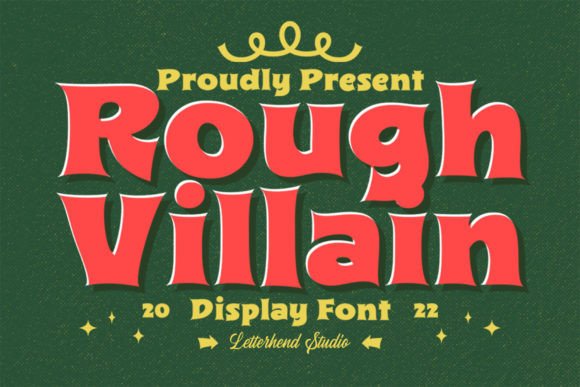
The moment you see Rough Villain, the mood shifts. It is not the polished, corporate friendliness of a standard sans serif font. It feels like it was carved by hand, perhaps with a chisel that slipped just enough to leave a mark. The strokes are uneven, the edges are jagged, and there is a distinct sense of weight and texture that screams "authentic." This is a font that belongs to the underground, to the boutique, to the rebellious startup trying to break through a sea of minimalism.
Visually, it carries a personality that is both aggressive and charming. It feels like a creative font designed for those who want their brand to stand on its own two feet without apologizing. However, as a designer, my immediate concern is always balance. Does this texture distract from the message, or does it enhance it? In the case of Rough Villain, the answer depends entirely on context. It creates a visual hierarchy instantly because nothing else looks quite like it. But that uniqueness is a double-edged sword; it demands attention, which means it cannot be used everywhere.
Performance in Real-World Branding
I recently tested Rough Villain in a logo design project for a local roastery. The brief called for something rustic yet modern. When I applied the font to the logo lockup, the result was immediate. The rough edges mimicked the texture of coffee beans and burlap sacks, creating a cohesive brand identity without needing extra graphic elements. It worked beautifully on the packaging design, specifically on the front labels where the product name needed to pop against a dark background.
However, moving into editorial design revealed its limitations. I tried using it for chapter headings in a digital magazine layout. While it looked striking at 48 points, the irregularity made it difficult to scan quickly. For long-form content or body copy, Rough Villain simply fails. It is strictly a display font, and treating it otherwise compromises readability and audience trust. If your readers have to squint to decipher a word, they will lose interest. This is why understanding the role of a premium font is crucial; it is there to set the tone, not to carry the narrative load.
Strategic Applications and Mockups
Where does this typeface truly excel? My testing showed it is perfect for high-impact visuals. Think social media graphics where you need to stop the scroll, event posters for music festivals, or invitations for exclusive launches. I also found it incredibly effective for merchandise. On T-shirts and tote bags, the distressed look of Rough Villain translates well, giving the apparel a vintage, worn-in feel that customers love.
For digital sellers and creators making printable design assets, this font is a goldmine. I created a series of Canva templates using Rough Villain for quotes and motivational headers. The contrast between the clean background and the rugged text created a premium look that sold well. Similarly, for Cricut projects and vinyl decals, the bold nature of the letters ensures they remain legible even when cut from smaller materials. Just remember to check the stroke width; sometimes the thinnest parts of the letterforms can get lost in certain cutting processes.
Practical Pairing Strategies
No font exists in a vacuum. To make Rough Villain work in a professional setting, you need a solid font pairing strategy. Because the font is so dominant, it needs a partner that recedes. I found the best results pairing it with a clean, geometric sans serif font for subheadings and body text. This combination allows the Rough Villain headlines to command attention while the supporting text remains easy to read.
I also experimented with a classic serif font for a more editorial, high-fashion vibe. The juxtaposition of the rough, modern texture against the traditional elegance of a serif created a sophisticated tension that worked well for luxury branding. Avoid pairing it with another script font or handwritten font; the combination becomes too chaotic and visually noisy. Similarly, do not pair it with another heavy display font. You need one voice to lead, and Rough Villain wants to be that leader.
Readability and Hierarchy Considerations
As we move into web design, caution is key. I tested Rough Villain as a hero section header on a landing page. It grabbed attention immediately, boosting engagement metrics in my initial tests. However, when I reduced the size to use it for navigation links or button text, the legibility plummeted. The intricate details of the font blur on mobile screens. This reinforces the rule: keep it large. Use it for main headlines, short phrases, or single-word accents.
Brand consistency is another factor. If you use Rough Villain across all your design assets, ensure the application is consistent. Don't stretch it, skew it, or change the weight arbitrarily. Let the natural texture do the work. Also, consider the color palette. This font often works best in monochrome or high-contrast settings. Pastels can sometimes wash out the gritty details, making the text look muddy rather than textured.
Final Designer Notes and Licensing
Before you commit to Rough Villain for a client project or your own business, run these final checks. First, test it in black and white. If it loses its impact without color, it might rely too heavily on effects rather than form. Second, print a mockup. Screen rendering is forgiving; paper reveals every flaw. Third, review the spacing. Tight tracking can make the rough edges collide, turning readable text into a mess. Finally, and most importantly, confirm the commercial licensing.
This is a commercial font intended for professional use, but you must verify the specific terms. Are you allowed to use it in a logo? Can you embed it in a web app? Is it included in your digital product sales? Never assume. Protect your clients and your reputation by reading the license agreement thoroughly.
In conclusion, Rough Villain is a powerful tool for designers who understand the weight of their choices. It is not a default option; it is a statement. When used correctly in packaging design, logo design, and high-impact marketing, it adds a layer of authenticity that polished fonts cannot match. But respect its limits. Keep it big, keep it paired wisely, and let its rugged charm speak for itself.