Hail King: A Playful Display Font for Editorial Design
I was staring at a blank canvas in my layout software, trying to find the right voice for a new seasonal recipe ebook. The content was warm and inviting, full of rustic charm, but the typography I had selected felt too rigid, too corporate. It lacked the human touch that makes a reader feel like they are sitting at a kitchen table with a friend. That is when I discovered Hail King. As a designer who spends hours curating fonts for various publishing projects, I often look for a typeface that bridges the gap between professional polish and genuine personality. Hail King turned out to be exactly that—a playful display font with distinctive handwritten characters that instantly elevated the mood of the entire project.
The Visual Character of Hail King
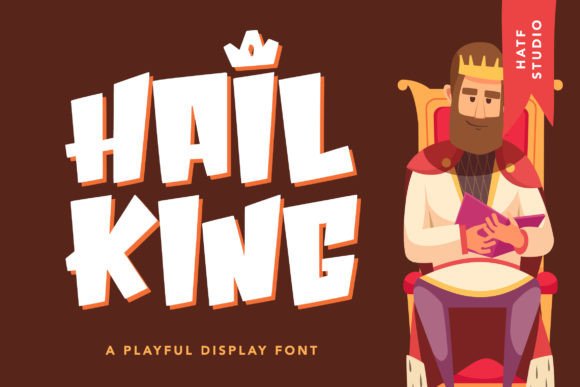
At its core, Hail King is a display font designed to make an immediate impression. Unlike standard sans serif or serif fonts that prioritize uniformity, Hail King embraces the irregularity of hand-drawn lettering. The strokes vary in weight, mimicking the natural pressure of a pen on paper, which gives the text a dynamic rhythm. When you first load this font into your design application, the energy is palpable. It does not sit quietly on the page; it invites attention.
For editorial designers, this level of expressiveness is a double-edged sword. If used incorrectly, it can clutter a layout. However, when applied with intention, Hail King becomes a powerful tool for establishing brand identity. In my recent testing, I used it for the chapter openers of a lifestyle blog redesign. The result was immediate: the headers no longer felt like structural necessities but rather like welcoming signposts. The font’s unique character shapes add a layer of warmth that digital typography often struggles to achieve without looking forced.
Establishing Mood and Publication Identity
Every publication needs a voice, and typography is one of the most effective ways to convey that tone. Whether you are creating a wedding guide, a coaching workbook, or a digital magazine, the choice of font sets the emotional stage for the reader. Hail King excels in scenarios where the goal is to evoke feelings of creativity, approachability, and joy. Its playful nature makes it an excellent candidate for branding projects that want to stand out from the sea of minimalist, sterile designs.
Consider the context of a printable planner or a course PDF. These documents often suffer from being overly functional and dry. By integrating Hail King as a primary accent font for section titles, the document transforms into something more engaging. It suggests that the creator cares about the aesthetic experience, not just the information delivery. This subtle shift can significantly impact audience engagement, making readers more likely to stay with the content and trust the authority of the publisher.
In the realm of social media graphics, where competition for attention is fierce, Hail King serves as a standout asset. A headline crafted in this creative font can stop a scroll much more effectively than a standard system font. It signals that what follows is special, curated, and worth the viewer's time. For independent content brands and creators selling digital products, having a premium font like this in your toolkit allows for a higher degree of customization and uniqueness in your visual assets.
Strategic Placement and Readability
While Hail King is visually striking, it is crucial to understand its limitations regarding readability. As a handwritten font, it is best suited for short bursts of text. It shines in headlines, pull quotes, cover text, and decorative accents. However, attempting to use it for body copy, small captions, or dense paragraphs would be a mistake. The intricate details and varying stroke widths can become difficult to decipher at smaller sizes or in long blocks of text, leading to reader fatigue.
Effective editorial design relies on strong visual hierarchy. Hail King should occupy the top tier of this hierarchy, drawing the eye to key messages before guiding the reader down to the supporting text. For instance, in a newsletter header, using Hail King for the "Welcome" message creates a friendly greeting, while the rest of the email body should remain in a clean, legible typeface. This contrast ensures that the playfulness of the display font enhances the layout rather than overwhelming it.
When designing for mobile layouts or screen reading, it is also important to test the font at various resolutions. The fluid lines of Hail King generally hold up well on high-definition screens, but designers should ensure sufficient spacing (kerning and tracking) to maintain clarity. In print materials, such as product packaging or wedding invitations, the texture of the paper can interact beautifully with the font's organic style, adding depth to the final output.
Perfect Pairings for Balanced Layouts
No display font exists in a vacuum. To create a cohesive and professional design, Hail King needs a reliable partner. The key to successful font pairing lies in contrast. Since Hail King is expressive and informal, it pairs exceptionally well with neutral, highly readable typefaces. A classic serif font for body copy can provide a traditional anchor, grounding the whimsy of the headers. Alternatively, a modern sans serif font offers a cleaner, more contemporary backdrop that lets the handwritten characters pop without competing for attention.
For example, in a recipe ebook, I paired Hail King with a simple geometric sans serif. The result was a layout that felt both modern and homey. The Hail King headers announced each recipe with enthusiasm, while the sans serif body text ensured that ingredient lists and instructions were easy to follow. This combination respects the reader's need for clarity while satisfying the desire for a beautiful, designed experience. Similarly, for a logo design or brand identity project, using Hail King for the main mark alongside a minimal sans serif for taglines creates a balanced and memorable visual identity.
Practical Considerations for Creators
Before committing to Hail King for a commercial project, there are several practical factors to consider. First, review the included styles and alternates. Many premium fonts offer ligatures, swashes, and alternate characters that allow for further customization. These features can be invaluable for adding unique flourishes to a title or creating a custom monogram for a client. Check if the font supports the languages required for your specific audience, especially if you are targeting a global market.
Licensing is another critical component. Ensure you have the appropriate commercial license if you plan to use the font in paid newsletters, ebooks, templates, or client publications. Using a font without the correct rights can lead to legal complications down the line. Most reputable font foundries offer clear licensing tiers for web, app, print, and merchandise use. Always verify the file formats provided—typically OpenType (.otf) or TrueType (.ttf)—to ensure compatibility with your design software, whether you are working in Adobe Creative Cloud, Canva, or other layout tools.
Ultimately, Hail King is more than just a collection of letters; it is a design asset that can breathe life into your editorial projects. It speaks to the growing demand for authentic, human-centric design in a digital world. Whether you are launching a new blog, redesigning a magazine feature, or creating a series of printable planners, this font offers a versatile and charming solution for those moments where standard typography falls short. By understanding its strengths and applying it with strategic restraint, you can create layouts that are not only informative but truly delightful to read.