Catelina: A Playful Display Font for Kids and Stories
I was sitting at my desk this morning, staring at a blank canvas for a new children's activity ebook. The content was ready—colorful illustrations of forest animals and simple nature facts—but the title page felt flat. I had tried three different serif fonts that looked too academic, and two script fonts that were too messy to read on a small screen. I needed something that spoke directly to the audience without shouting. That is when I decided to test Catelina, a display font designed specifically to bring a sense of joy and approachability to editorial projects.
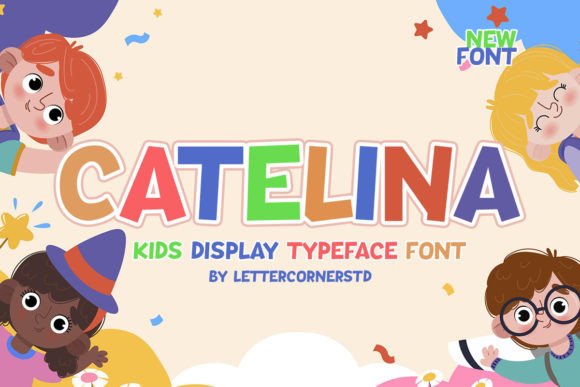
The moment I loaded Catelina into my design software, the mood of the entire layout shifted. It is not just another decorative typeface; it feels like a character in its own right. The bold letters have a rounded, friendly quality that immediately signals "safe" and "fun." For a project targeting children or families, this visual cue is essential. It bridges the gap between professional publication quality and the whimsical world of imagination.
Finding the Right Rhythm for Children’s Content
In editorial design, the choice of typography dictates how a reader interacts with the story before they even read a single word. When working on materials for kids, such as printable planners, recipe ebooks for family cooking, or digital magazine features, the rhythm of the text matters immensely. Catelina offers a unique cadence. The letterforms are sturdy yet soft, avoiding the sharp edges that can sometimes feel aggressive in modern typography.
I started by applying Catelina to the main header of the ebook cover. The result was instant clarity. The bold weight of the font ensures that the title stands out against the busy background illustrations, creating a strong visual hierarchy. Unlike many handwritten fonts that struggle with legibility at larger sizes, Catelina maintains its structure perfectly. It feels intentional and crafted, which elevates the perceived value of the digital product.
As I moved through the interior pages, I tested the font for chapter openers and section headings. Here, the playful attitude of the typeface really shone. It invited the young reader to dive into the next page. However, I quickly realized that while Catelina is a powerhouse for titles, it is best used sparingly. Its personality is so distinct that using it for long-form body copy would distract from the narrative rather than support it.
Building Visual Hierarchy with Bold Letters
One of the most challenging aspects of designing for mixed audiences—parents buying the book and children reading it—is balancing engagement with readability. Catelina solves this by acting as an anchor. When paired with a clean sans serif font for the instructional text, the contrast creates a natural flow. The eye is drawn first to the fun, bold headlines set in Catelina, then guided down to the simpler, more neutral body text.
I experimented with this pairing in a mock-up for a lifestyle blog redesign focused on parenting tips. The blog headers needed to be catchy enough to stop the scroll but clear enough to communicate the topic instantly. Catelina delivered exactly that. It added a layer of warmth to the brand identity, making the site feel less like a corporate news outlet and more like a friendly neighbor sharing advice.
This versatility extends beyond digital screens. I also laid out a printable guide for a local library event. In print, the thick strokes of Catelina held up beautifully, ensuring that the text remained crisp even when printed on slightly textured paper. This durability makes it an excellent choice for physical design assets like worksheets, coloring book covers, and educational posters.
Practical Applications for Creators
- Ebook Covers: Use Catelina for the main title to grab attention on tablet and Kindle displays.
- Newsletter Graphics: Create engaging headers for weekly family newsletters that stand out in crowded inboxes.
- Course PDFs: Design course workbooks for parents or teachers where a friendly tone encourages participation.
- Social Media: Generate quote graphics and promotional posts that align with a warm, creative brand voice.
- Printable Planners: Add a touch of whimsy to daily schedules and habit trackers for kids.
Navigating Readability and Format Considerations
While the aesthetic appeal of Catelina is undeniable, practical considerations are crucial for any serious designer. As a premium font, it is important to understand its technical limitations and strengths. Because it is categorized as a display font, it excels in short bursts of text. When setting type for mobile layouts, I found that the generous spacing and rounded forms rendered beautifully on high-resolution screens, maintaining legibility even at smaller point sizes for pull quotes.
However, for long paragraphs, the density of the bold letters can become visually heavy. This is why font pairing is non-negotiable. I recommend pairing Catelina with a highly readable serif or sans serif for all body content. This combination respects the reader's cognitive load, allowing them to enjoy the decorative elements without feeling overwhelmed.
Before integrating Catelina into any commercial project, such as a paid newsletter, client publication, or digital download shop, it is vital to review the licensing terms. Ensure that the license covers your intended use, whether that is web embedding, app integration, or print-on-demand services. Checking for included styles, alternates, and multilingual support is also a smart step. If your audience spans different languages, verifying character sets will save you from last-minute design crises.
Crafting a Cohesive Brand Identity
Ultimately, typography is about storytelling. Catelina tells a story of curiosity, play, and warmth. Whether you are designing a wedding guide for a couple with young children, a coaching workbook for family therapists, or a digital magazine feature on early education, this font brings a consistent emotional tone to the project.
It transforms a standard document into an experience. The bold letters do not just convey information; they convey an attitude. They suggest that the content inside is safe, enjoyable, and made with care. In a digital landscape often cluttered with harsh, generic typefaces, choosing a thoughtful creative font like Catelina can be the difference between a reader scrolling past and a reader staying to explore.
As I finalized the ebook layout, the title page finally felt complete. The forest animals seemed to pop off the page, framed perfectly by the inviting curves of the type. It was a reminder that good design is not just about making things look pretty; it is about making them feel right. For anyone looking to inject a bit of magic into their publishing projects, Catelina is a worthy addition to your toolkit.